
The Complete Guide to Employee Benefit Plan (EBP) Audits in 2026: Everything CPA Firms and Plan Sponsors Need to Know
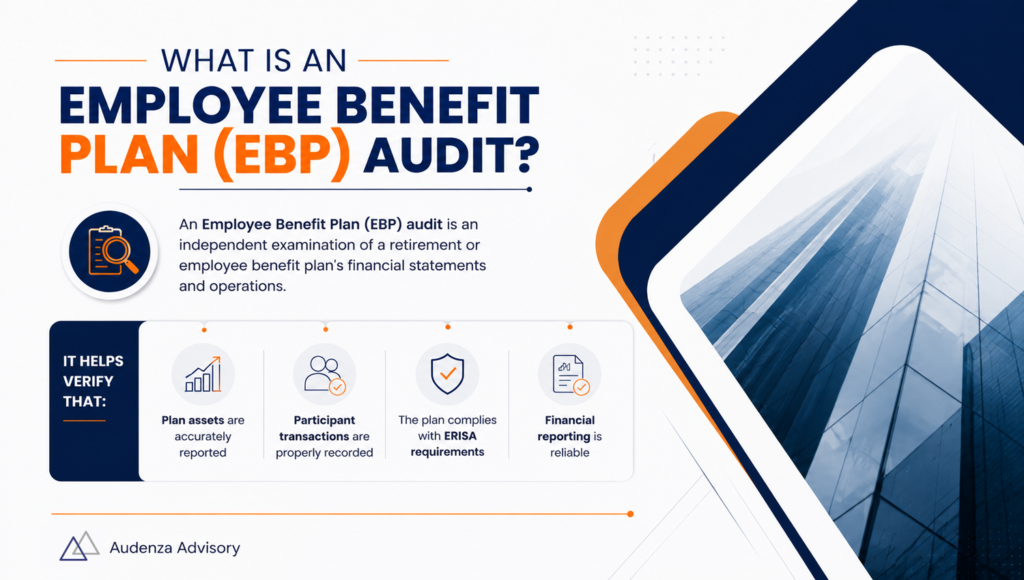
The Complete Guide to Employee Benefit Plan (EBP) Audits in 2026: Everything CPA Firms and Plan Sponsors Need to Know Executive Summary Employee Benefit Plan (EBP) audits sit in an odd spot in the accounting world: they’re mandatory for hundreds of thousands of retirement and welfare plans, they carry real fiduciary and financial stakes for plan sponsors, and yet they’re still treated by many firms as a lower-priority, seasonal add-on rather than a specialized practice area. That gap is exactly where problems show up. This guide walks through what an EBP audit actually is, which plans need one, how the process works from planning through reporting, and what the Department of Labor’s own data says about audit quality across the profession. It also covers the documentation plan sponsors need to gather, the findings that show up most often, and the operational pressures – a shrinking CPA pipeline chief among them – that are pushing more firms toward audit support partnerships. Whether you’re an audit partner scoping next busy season or a controller trying to figure out why your plan suddenly needs an audit this year, the goal here is the same: give you a clear, accurate, and practical reference you can actually use. Table of Contents What Is an Employee Benefit Plan Audit? Which Employee Benefit Plans Require an Audit? Who Needs an EBP Audit? Understanding ERISA Requirements The Complete EBP Audit Process Documents Required for an EBP Audit Common Audit Findings Best Practices for Audit Readiness How Technology Is Changing EBP Audits Why CPA Firms Are Leveraging Audit Support Teams Frequently Asked Questions Key Takeaways Introduction Every year, hundreds of thousands of 401(k), pension, and health and welfare plans in the United States cross a threshold that most plan sponsors never think about until it hits them: the point at which federal law requires an independent audit of the plan’s financial statements. For plan sponsors, this often arrives as a surprise – a headcount milestone buried in a Form 5500 filing deadline. For CPA firms, it arrives as a specialized, high-stakes engagement that doesn’t forgive generalist shortcuts. The regulatory spotlight on these audits has only gotten brighter. As of fiscal year 2025, the Department of Labor’s Employee Benefits Security Administration (EBSA) oversees roughly 2.8 million health plans, 837,000 private pension plans, and 521,000 other welfare benefit plans, protecting more than 155 million workers, retirees, and dependents whose plans hold an estimated $13.8 trillion in assets. In fiscal year 2025 alone, EBSA recovered more than $1.4 billion for plans, participants, and beneficiaries, with over half of that coming directly from enforcement actions. At the same time, the profession responsible for performing these audits is under real strain. Fewer CPA candidates are entering the pipeline, experienced auditors are retiring in large numbers, and the number of CPA firms willing to take on EBP audit work has been shrinking for over a decade even as the number of plans requiring audits has grown. That combination – rising regulatory scrutiny and a thinning bench of specialized auditors, is precisely why EBP audit quality, preparation, and staffing strategy deserve far more attention than they typically get. This guide is built for two audiences. If you’re an audit partner or manager at a CPA firm, you’ll find a full walkthrough of the process, the quality benchmarks the DOL uses to judge firms like yours, and the staffing realities shaping how firms compete for this work. If you’re a plan sponsor, CFO, controller, or HR leader, you’ll find a plain-language explanation of why your plan needs an audit, what your auditor will ask for, and how to avoid becoming a statistic in next year’s DOL deficiency study. Section 1: What Is an Employee Benefit Plan Audit? An Employee Benefit Plan audit is an independent examination of a plan’s financial statements, typically a 401(k), pension, ESOP, or health and welfare plan – performed by a licensed CPA to confirm the plan’s financial condition is fairly presented and that it’s being operated in accordance with its own governing documents and applicable law. Unlike a corporate financial statement audit, an EBP audit isn’t primarily about a company’s profitability. It’s about protecting the retirement and benefit assets of a plan’s participants. The auditor is testing things like: Were contributions deposited on time? Are participant accounts and eligibility calculated correctly? Are investments properly valued? Were distributions and loans processed according to plan terms? Is the plan being run the way its plan document says it should be run? Regulatory framework. EBP audits exist because of the Employee Retirement Income Security Act of 1974 (ERISA), the federal law that sets minimum standards for most voluntarily established retirement and health plans in private industry. ERISA Section 103(a)(3)(A) requires plans with more than 100 participants to retain an Independent Qualified Public Accountant (IQPA) to audit the plan’s financial statements in accordance with Generally Accepted Auditing Standards (GAAS)ERISA Section 103(a)(3)(A) requires that employee benefit plans with more than 100 participants retain an IQPA to perform an audit of the plan’s financial statements. This section requires that the audit be performed in accordance with GAAS.. That audit report then gets attached to the plan’s Form 5500 annual return, which is filed jointly with the DOL and IRS. Two federal agencies share oversight here, and they care about different things. The DOL, through EBSA, is focused on protecting participants’ rights and plan assets. The IRS is focused on whether the plan maintains its tax-qualified status. Both rely on the audited Form 5500 filing to do their jobs, which is a big part of why the quality of the underlying audit matters so much – a weak audit doesn’t just create risk for the plan sponsor, it undermines two federal agencies’ ability to monitor the system. Purpose, in plain terms: an EBP audit exists to give the DOL, the plan’s participants, and the plan sponsor’s own fiduciaries confidence that the money set aside for employees’ retirement or health benefits is being handled correctly, recorded accurately, and protected